
INDEX
- PUNJAB- THE FOOD BOWL OF INDIA
- TREND OF AGRICULTURE IN PUNJAB’S ECONOMY
- EFFECT OF AGRICULTURAL PRACTICES IN THE STATE
- FISHERIES & AQUACULTURE- ADVANTAGE PUNJAB
- RECIRCULATORY AQUACULTURE SYSTEM (RAS)- ADVANTAGE PUNJAB
- DOMESTIC POTENTIAL FOR AQUACULTURE IN PUNJAB
- EXPORT POTENTIAL OF AQUACULTURE IN PUNJAB
- CASE STUDY: PUNJAB VS ANDHRA PRADESH
- SCHEMES BY GOVERNMENT OF INDIA TO HELP FISHERIES SECTOR
- PRADHAN MANTRI MATSYA SAMPADA YOJNA (PMMSY)
- CONCLUSION
PUNJAB – THE FOOD BOWL OF INDIA
Punjab has had a major contribution in agriculture development and ensuring self-sufficiency in food grain production in the country. With only 1.53% of geographical area of the country, the state contributed 31.22% of rice and 46.24% of wheat in the central pool (upto Jan 2024)[1]. It has the highest yield of rice, 2nd highest yield of wheat, and is also the 2nd highest producer of kinnow and peach across all states in India. The state also produces many vegetables and other food items at a large scale. The state also has the highest cropping intensity in the country.
- TREND OF AGRICULTURE IN PUNJAB’S ECONOMY
The share of Agriculture in the national as well as the state’s economy is increasing at a very slow pace. Traditionally, Agriculture followed by Manufacturing have been the pillars of growth for the State.
The graph below (Figure-1) shows the low growth rate in the Net State Value Added (constant prices) by Agriculture and Allied Sectors in the state of Punjab for the past 5 years, which is compared to the Manufacturing sector[1].
2.TREND OF AGRICULTURE IN PUNJAB’S ECONOMY
The share of Agriculture in the national as well as the state’s economy is increasing at a very slow pace. Traditionally, Agriculture followed by Manufacturing have been the pillars of growth for the State.
The graph below (Figure-1) shows the low growth rate in the Net State Value Added (constant prices) by Agriculture and Allied Sectors in the state of Punjab for the past 5 years, which is compared to the Manufacturing sector[1].

Figure-1: As evident from the above graph, the Net State Value Added by Agriculture and Allied Sector grew at a paltry CAGR of 3.53 % and Manufacturing at 3.82%.
Also, as per Punjab Economic Survey 2023-24, Agriculture and allied sector grew at 2.70% in 2022-23 and is expected to register a growth rate of 2.35% in 2023-24(A). Moreover, the growth rate in GSVA of crop husbandry, over the period 2012-13 to 2022-23, was just 0.67%. The bulk of growth was due to thelivestock rearing, which grew at average growth rate of 4.8% in the same period[1].
As evident, the current growth rates in crop husbandry cannot sustain the aspirations of the state and some paradigm shift is needed.
3. EFFECT OF AGRICULTURAL PRACTICES IN THE STATE
Agriculture is a necessary activity, as without agriculture we will simply starve. There is no doubt that Agriculture in Punjab plays an indispensable role when it comes to the overall food security of the country. However, Punjab is also susceptible to problems associated with large scale agricultural practices.
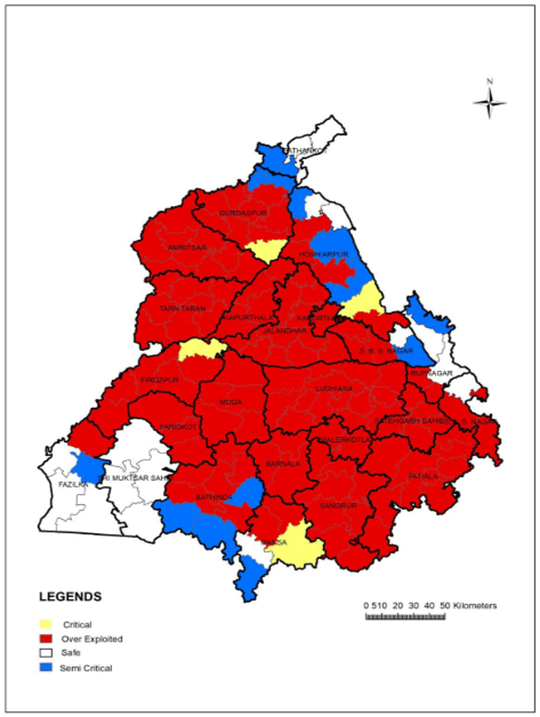
Figure-2: Categorization of Ground Water Assessment Units in Punjab State 2022[1]
Even though Punjab has a dense network of irrigation canals, the water supplied through canals is insufficient and a huge quantity of ground water is used for cultivation and other agricultural purposes. This has led to a serious Even though Punjab has a dense network of irrigation canals, the water supplied through canals is insufficient and a huge quantity of ground water is used for cultivation and other agricultural purposes. This has led to a serious
4. FISHERIES & AQUACULTURE
Being a landlocked state, Punjab may seem to have low potential for fish production, as it leads to low wild catch fish. But with the advent of aquaculture, it is no longer the case in which only coastal states can look at fisheries as a major source of food and income. Aquaculture has the potential to provide significant earnings for the state and businesses.
As per a McKinsey report, projections show growth of 14 percent by 2030 versus 2020 levels, driven by growing market in Asia, Europe, Latin America, and Oceania. However, the amount of wild-caught seafood remains flat, with more than 85% of the world’s fisheries pushed to or beyond their limits[1]. OECD projects that global fish production will reach 202 million metric tonnes by 2032, and aquaculture is projected to account for 55% (~111 million metric tonnes) of total fish production[2]. The potential of Aquaculture for a state like Punjab is not just local but global, as we will explore further.
One might wonder why we are talking about aquaculture, supposedly a water intensive practice, just after discussing the alarming state of water table in Punjab. To answer this question, let’s explore Recirculatory Aquaculture Systems (RAS) in some detail.
5. RECIRCULATORY AQUACULTURE SYSTEMS (RAS)- ADVANTAGE PUNJAB
Recirculatory Aquaculture Systems (RAS) represent a sophisticated approach to fish farming that emphasizes water conservation and intensive fish production.
Here’s a breakdown of key features of RAS[1]:
Enclosed System: RAS systems are closed-loop systems where water is continuously recycled within the system. This closed environment allows for precise control over water quality parameters such as temperature, dissolved oxygen, pH, and ammonia levels.
Water Conservation: Unlike traditional open aquaculture systems, RAS minimizes water usage by replacing only the water lost to evaporation, splash out, and cleaning processes. This makes RAS more sustainable and environmentally friendly.
Intensive Fish Production: RAS enables higher densities of fish to be reared compared to traditional aquaculture methods. This is achieved through efficient waste removal and water filtration systems that maintain optimal water quality for fish health and growth.
Controlled Environment: Fish are housed in indoor tanks where environmental conditions can be closely monitored and adjusted as needed. This controlled environment reduces the impact of external factors such as weather changes, pathogens, and predators.
Advanced Filtration Technology: RAS employs mechanical and biological filtration methods to remove solid wastes and convert harmful compounds (such as ammonia) into less toxic forms. This ensures that the water remains clean and suitable for fish throughout the production cycle.
Versatility: RAS can be adapted to farm a wide range of fish species, including both freshwater and marine species. This flexibility allows farmers to choose species based on market demand, ecological suitability, and economic factors.
In summary, Recirculatory Aquaculture Systems (RAS) offer a sustainable and efficient method for fish farming by maintaining a controlled environment, conserving water, and enabling intensive production of various fish species. Despite requiring rigorous management and initial investment in infrastructure, RAS holds promise for meeting increasing global demands for seafood while minimizing environmental impacts.
Let us now explore the potential of RAS in Punjab.
A. DOMESTIC POTENTIAL OF AQUACULTURE IN PUNJAB:
Even within India, there seems to be tremendous potential for Aquaculture for a state like Punjab. Look at the top 3 states’ fish production viz-a-viz Punjab’s:

Figure-3: Last 6 year’s Inland and Marine Fish production in Andhra Pradesh, West Bengal, Karnataka and Punjab[1]
The top three states in India, production-wise, are Andhra Pradesh, West Bengal, and Karnataka. Together, these three states accounted for approx. 48% of total fish production in the country. Notice that all these states are in the South and East of the country. This presents an opportunity for Punjab to increase presence in the domestic market in North India.

Figure-4: Three scenarios of growth in fish consumption with estimated growth in population of India[1]
A study by WorldFish.org has postulated three case scenarios: current growth rate continuing till 2048, an 11.68% average growth rate for Bangladesh, Egypt, Sri Lanka and China, and an 18.07% average growth rate for Cambodia and Myanmar. If India can maintain the growth rate of the countries in the second scenario (Bangladesh, Egypt, Sri Lanka), along with India’s future growth of population as projected by the UN, the country will reach per capita consumption levels of 15.91 kg by 2029–2030, 23.71 kg by 2039–2040 and 29.95 kg by 2047–2048, as shown by Figure-4. Note that fish production for other purposes (that is, not intended for consumption) is not considered in the above scenarios.
There are many reasons for the phenomenal projected growth rate of fish consumption in India. First, the population is expected to be just slightly lower than 167 Crores by 2050[1]. Second, increasing per-capita income and evolving dietary preferences of the population may lead to a higher consumption of more relatively expensive protein-rich foods like fish and shrimps. These signs point towards a huge potential demand for fish and shrimps in the country in future.
B. EXPORT POTENTIAL OF AQUACULTURE IN PUNJAB:
Let us consider one of the highly exported high-value Fisheries product, L. Vannamei Shrimp, in numbers to understand the export potential for Aquaculture.

Table 1: Export Data of L. Vannamei Shrimps for 2022-2024[1]
As per the above table, the average price that was fetched by exporting these shrimps was Rs. 555.6 per Kg on average from 2022 to 2024. The use of Recirculating Aquaculture System (RAS) may yield more than 25000 Kg per hectare/ year[1]. Taking this yield as the basis and assuming 85% survival rate of the shrimps, the yearly income potential for shrimp farmers and exporters per hectare of land will be Rs. 1,18,05,780 /-. Even if we consider a 50% margin for the shrimp exporter, we get Rs. 59,02,890/-.
Now, let us contrast these numbers with the numbers from export of Basmati Rice. Traditionally, Basmati rice has fetched a higher price for the farmers and is one of the major export commodities of Punjab.
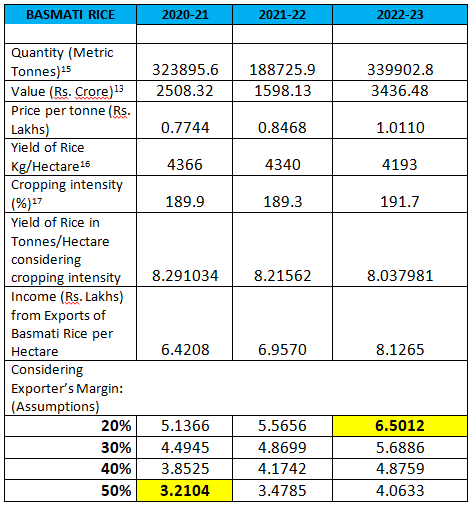
Table-2: Analysis of Farmer’s incomes from the export of Basmati Rice from Punjab
From Table-2 above, we can see that a Farmer’s income from the export of Basmati Rice could have been anywhere from Rs. 3,21,040 per Hectare to Rs. 6,50,120 per Hectare. Contrast this with the possible income range of Rs. 59,02,890 to Rs. 1,18,05,780 and we can understand the tremendous potential that Aquaculture provides. It is true that RAS systems are expensive to set up and take few years to recover the costs. Nevertheless, the potential income in the long run is also very high and merits consideration. Also, the application and use of RAS systems can potentially solve other critical issues such as the depletion of water table in the State of Punjab
6. CASE STUDY: PUNJAB VS ANDHRA PRADESH:
As we saw at the beginning of this article, Punjab is an important state when it comes to the food security of India. Yet, it is very interesting to see how the state compares with some of the other states in the country in terms of agriculture and agricultural economy. A comparison with the state of Andhra Pradesh offers crucial insights. Figure-5 below shows the Gross State Domestic Product (GSDP), in Lakhs Rupees, from Agriculture. As seen from this graph, the GSDP for Agriculture was similar in 2011-12 for the two states.
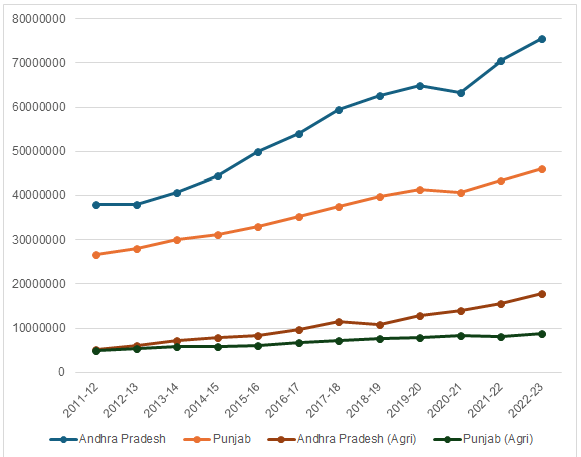
Figure-5: Gross State Domestic Product in Rs. Lakhs (Current Prices, as on 01.08.2023) of Andhra Pradesh vs Punjab[1]
Some may object to the above graph by stating that Andra Pradesh, with a total area of 160,205 Sq. Km.[1], is more than thrice the size of Punjab, which has an area of 50,362 Sq. Km.[2] and hence the state of Andhra Pradesh might have had more scope to expand its agricultural activities. While that looks true on paper, that is not the case. Consider the following graph (Figure-6) of Net Sown Area through the past few years. We can see from Figure-6 that the Net Sown Area of Punjab in the past few years has always been between 17 to 20 times that of Andhra Pradesh, meaning that Punjab has been much more involved in agriculture than Andhra Pradesh. The data clearly shows that Andhra Pradesh has performed much better in Agriculture in terms of Gross State Domestic Product.

Figure-6: Net Sown Area (‘000 Hectares) of Andhra Pradesh vs Punjab from 2011 to 2021[1]
To understand the reasons for the performance of Andhra Pradesh, let’s look at Figure-3 again. The inland fish production of Andhra Pradesh increased 58.38% between 2017-18 and 2022-23. In the same period, Total GSDP of Andhra Pradesh and Punjab increased by 26.84% and 22.94% respectively. However, GSDP by Activity of Fisheries for Andhra Pradesh and Punjab increased by 89.41% and 66.08% respectively in absolute terms, and the CAGR during this period was 11.23% and 8.816% respectively. Juxtapose these growth rates with the base on which this growth took place (Rs. 58,72,143 Lakhs and Rs.1,44,243 Lakhs respectively for Andhra Pradesh and Punjab in the 2017-18), and we can see that Inland Fisheries had a massive impact on the GSDP of Andhra Pradesh. Andhra Pradesh’s Fisheries economy was already massive before 2017, but thanks to the phenomenal growth in Fisheries, Andhra Pradesh managed to propel its economy to greater heights. Have a look at the GSDP (Fisheries Sector) growth from 2011-12 to 2022-23 for the two states in Figure-7.
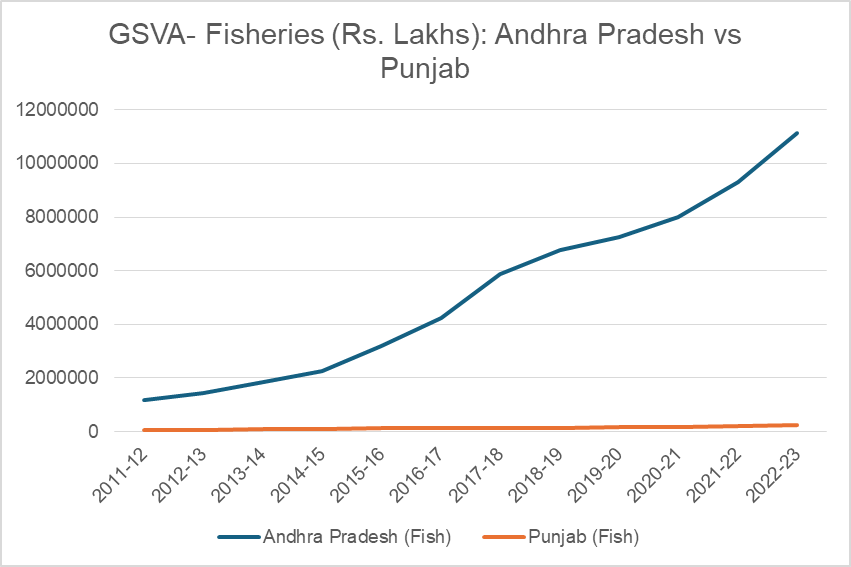
Figure-7: Gross State Value Added from Fisheries: Punjab vs Andhra Pradesh
7. SCHEMES BY GOVERNMENT OF INDIA TO HELP FISHERIES SECTOR
The Government of India has launched some good schemes to develop Fisheries sector in the country. The schemes that can be utilized by Punjab are stated below.
- Pradhan Mantri Matsya Sampada Yojna (PMMSY)
The scheme “Pradhan Mantri Matsya Sampada Yojana (PMMSY)” has been launched by the Department of Fisheries; Ministry of Fisheries, Animal Husbandry, and Dairying. This scheme has been launched to bring about ecologically healthy, economically viable, and socially inclusive development of the fisheries sector of India. More about the scheme can be read on myscheme.gov.in[1]. This scheme has an outlay of more than Rs. 20,000 Crores to be utilized by 2024-25. This presents a great opportunity for farmers/ investors to move into fisheries, that has a high growth and income potential.
8. CONCLUSION:
We have seen and understood the crucial role that the state of Punjab plays when it comes to the food security of the country. But we also see the price that the state has paid in fulfilling the needs of the country. The wheat-paddy cycle inflicts a heavy cost on the state, and there is an urgent need to diversify away from this cycle. The good news is: we can do it, we can do better and even reverse the side effects that agriculture of wheat-paddy has had on the soil health of the state. If we give a serious thought to the Fisheries Sector in the State, we can achieve a lot! We can increase the state’s GDP, increase farmers’ income, and maybe even turn back the ecological loss that has happened in the state.
Punjab brought Green Revolution in the country. Can it bring a Blue Revolution now???
Written By: Bidesh Bose, Senior Consultant, Invest Punjab
 Invest Punjab Blogs