
India’s healthcare delivery sector, a cornerstone of the nation’s economy, contributed over USD 216 billion in FY23 and is poised to grow at a remarkable 18% CAGR. The sector’s evolution reflects transformative trends, including increasing life expectancy, a surge in chronic illnesses, and India’s emergence as a global hub for cost-effective, complex medical procedures. Supportive government initiatives, expanding insurance coverage, and growing health consciousness further fuel this dynamic ecosystem.
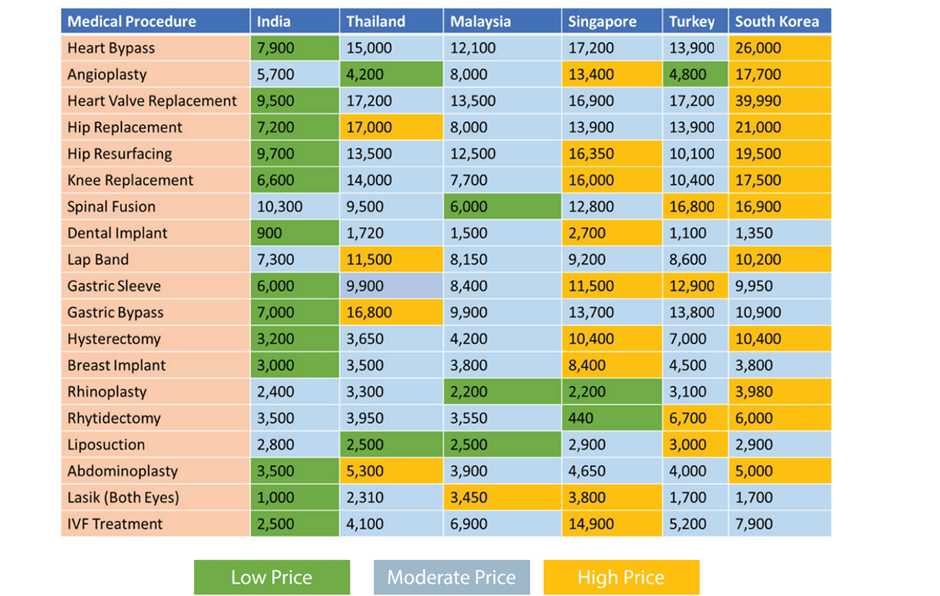
Prices of Common Medical Procedures Across Major Destinations for Medical Value Travel (USD)
However, while metro cities have traditionally been healthcare epicenters, Tier 2 and Tier 3 cities, including Punjab’s urban centers like Ludhiana, Amritsar, Jalandhar, and Patiala, and the border districts are now pivotal to bridging the accessibility gap and addressing systemic inequities. These cities represent the next wave of growth, offering unique opportunities and challenges that demand innovative, localized solutions.
The Rising Healthcare Demand in Tier 2 and Tier 3 Cities
Demographics: A Key Catalyst for Transformation
- Tier 2+ cities are expected to house an additional 40 million people by FY27, with Tier 3 cities outpacing the national population growth rate (2.6% vs. 0.7%).
- Punjab’s urban population is growing steadily, especially in cities like Ludhiana and Amritsar, which are experiencing significant inward migration and economic expansion.
- Increased income levels and health awareness are driving demand for better healthcare facilities, creating an urgent need for advanced medical infrastructure and services.
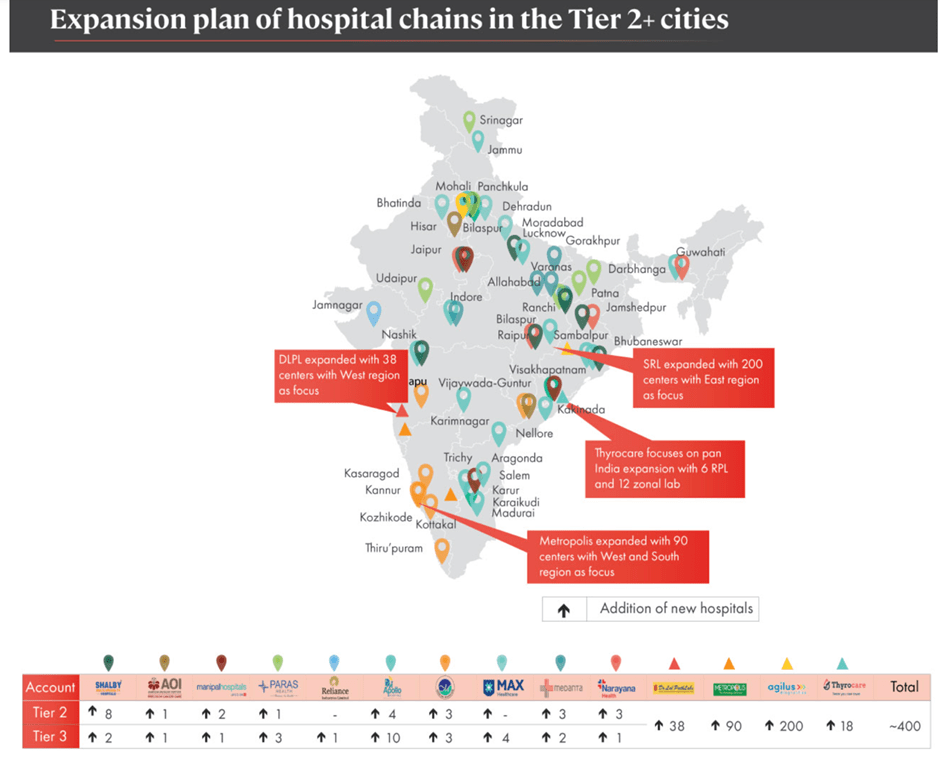
As per a report, the following exhibit gives a snapshot of the expansion plan of hospital chains in the Tier 2+ cities of India:
Healthcare Disparities and the Urban-Rural Divide
- 67% of India’s population lives in rural areas, yet these regions account for only 30% of hospital beds and face a staggering doctor-to-patient ratio of 1:25,000, far below the WHO-recommended 1:1,000.
- In Punjab, the rural districts grapple with similar disparities, particularly in districts like Ferozepur and Barnala, where access to specialist care remains limited. Urban centers like Ludhiana are stepping up to fill this gap, serving as referral hubs for surrounding villages.
Senior Care Market Expansion
India’s USD 7 billion senior care market is increasingly penetrating Tier 2 cities, including Punjab. Key trends in this segment include:
- Assisted Living Facilities: Cities like Jalandhar are emerging as hotspots for residential care services tailored to the elderly population.
- Home Healthcare Solutions: These are gaining traction, particularly for chronic disease management and post-operative care in Punjab’s aging demographic.
Favorable Government Policies
India’s government has rolled out transformative policies to bolster healthcare infrastructure in underserved regions:
- Ayushman Bharat: This flagship scheme provides financial protection for over 500 million Indians, including in Punjab, ensuring access to tertiary care.
- Six New AIIMS Facilities: These are being established in Tier 2 cities to decentralize advanced medical care.
- National Ambulance Service: With free transportation under the National Health Mission, even remote areas in Punjab benefit.
- Viability Gap Funding (VGF): This subsidy has been increased to 30% for healthcare projects, spurring Public-Private Partnership (PPP) initiatives in cities like Ludhiana.
- Aam Aadmi Clinics: Punjab has established 165 new Aam Aadmi Clinics, enhancing the availability of primary healthcare services. These clinics have emerged as a flagship initiative of Punjab’s healthcare transformation, boasting over one crore beneficiaries as of February 2024. They offer a wide range of free medicines and diagnostic tests, ensuring that quality healthcare is a right for every resident of Punjab, regardless of their economic status.
- Mobile Health Units: Launched to provide medical services in remote areas, ensuring that health services reach underserved populations.
- Sehat Cards: These help identify eligible families for health schemes, improving access to medical services and insurance coverage.
- Punjab cabinet recently approved the creation of 1,390 additional posts for medical officers. This move aims to address the acute shortage of medical professionals, enhancing the quality and accessibility of healthcare services across the state. The decision to streamline the recruitment process through the Baba Farid University of Health Sciences, Faridkot, marks a significant shift towards efficiency in healthcare governance. Additionally, the government’s focus on upgrading healthcare facilities is evident from its initiative to revamp 40 secondary healthcare institutions, including community health centers and district hospitals.
- In November 2023, the state launched a mental health intervention program for inmates across four major jails, addressing the often-neglected issue of mental health in correctional facilities. Along similar lines, the government’s “CM Di Yogshala” project, initiated in March 2024, underscores a holistic approach to health by promoting yoga across all districts. The deployment of 315 new yoga trainers to conduct free classes at the village and block levels is an effort to foster a culture of wellness and preventive healthcare.
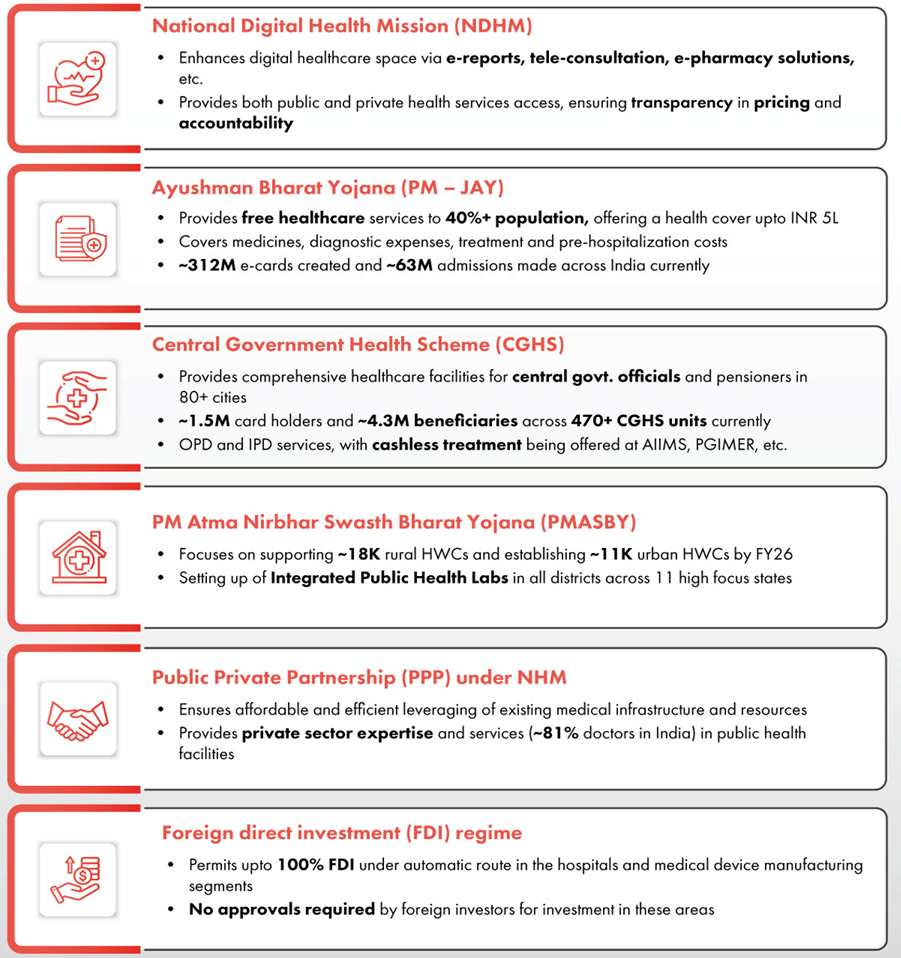
As per a report, the following exhibit gives a snapshot of the major schemes of governments:
Technological Advancements Transforming Healthcare
- Telemedicine and Health Information Systems and Electronic Health Records (EHR): Crucial for rural areas in Punjab, enabling consultations for remote villages via digital platforms.
- Point-of-Care Diagnostics: Facilitating rapid testing in smaller towns like Sangrur and Hoshiarpur, improving early detection rates.
- Artificial Intelligence (AI): Used in diagnostic imaging and chronic disease management, especially where specialists are scarce.
- Wearable Devices: Adoption is growing for chronic disease monitoring, aligning with Punjab’s rising burden of diabetes and cardiovascular diseases.
- Localized Health Chatbots: Language-adaptive AI is bridging the communication gap in regions where Punjabi is predominant.
Increasing Demand for Specialized Services
Punjab is seeing rising demand for specialized treatments, including cardiology, oncology, and orthopedics.
- Approximately 64% of surgeries in India are conducted in Tier 2+ cities, with 76% occurring in government hospitals. In Punjab, Amritsar and Ludhiana are key players in expanding access to these services.
- The increasing prevalence of non-communicable diseases (NCDs), such as diabetes and hypertension, underscores the need for targeted healthcare strategies.
Challenges in Healthcare Expansion in Tier 2 and Tier 3 Cities
1. Workforce Shortages
- 80% of specialists reside in urban areas, leaving rural and Tier 2 cities in Punjab underserved.
- Training and retaining healthcare workers in smaller towns remain pressing challenges.
2. Infrastructure and Equipment Deficits
- Inadequate infrastructure, particularly in transport and utilities, hinders the seamless operation of healthcare facilities in rural Punjab.
- Maintenance of advanced medical equipment is a challenge, resulting in frequent downtime in smaller towns.
3. Financial Barriers
- Cost sensitivity of the population in Tier 2+ cities necessitates affordable solutions.
- Variable purchasing power in rural Punjab highlights the importance of innovative financial models and insurance coverage.
4. Logistical Bottlenecks
- Poor transportation networks impede the timely delivery of medical supplies, especially in remote districts like Tarn Taran and Mansa.
Strategic Opportunities for Healthcare Stakeholders
Hospitals and Healthcare Providers
- Localized Business Models:
- Asset-light satellite centers in Punjab’s underserved districts can provide scalable, cost-effective solutions.
- Leveraging telemedicine to connect rural patients with urban specialists.
- Affordable Healthcare Packages:
- Designing services that align with local economic demographics.
- Collaborating with insurance providers to broaden coverage.
- Training Programs:
- Developing regional training centers to upskill healthcare workers.
- Focusing on task-shifting to optimize resources in low-access areas.
Diagnostic Service Providers
- Establishing mobile collection units and affordable diagnostic packages tailored to Punjab’s rural population.
- Partnering with local hospitals to enhance diagnostic reach.
Medical Device Manufacturers
- Introducing cost-effective, durable equipment suited to Punjab’s Tier 2 and rural markets.
- Promoting point-of-care technologies to address the challenges of under-resourced settings.
Pharmaceutical Companies
- Expanding distribution networks in smaller cities.
- Conducting clinical trials in Punjab’s hospitals, leveraging the growing patient base.
As per report, the following gives a detailed snapshot of the business models that can be leveraged to capitalize on the rising opportunity in Tier 2+ cities:

Conclusion
Punjab’s Tier 2 and Tier 3 cities are emblematic of India’s broader healthcare transformation. With the right blend of technology, policy support, and innovative business models, these regions can overcome their challenges and unlock their full potential. As Punjab continues to urbanize and innovate, it exemplifies how Tier 2+ cities are redefining the future of healthcare in India.
References:
https://www.medicalbuyer.co.in/indias-usd-7b-senior-care-market-seeing-a-push-into-tier-ii-cities/ ,
 Invest Punjab Blogs