
India is one of the fastest-growing economies in the world, and its energy consumption is expected to rise rapidly. According to estimates from the Ministry of Petroleum and Natural Gas (MoP&NG), India has a total reserve of 763 million metric tons (MMT) of crude oil and 1,488 billion cubic meters (BCM) of natural gas. Currently, the country imports nearly 77% of its crude oil needs and about 50% of its natural gas requirements. In response, the Government of India has set a target to reduce these imports by at least 10% by 2025.
In parallel, the State of Punjab, known as the food bowl of India, is expecting its paddy output to surpass 205 lakh metric tons, with an average yield increasing by more than four quintals per hectare compared to the previous year. However, the large-scale consumption of this paddy output presents a significant challenge for Punjab, as the leftover paddy straw is often burned in the fields after the harvest season. This practice not only leads to severe air pollution but also degrades the soil quality where the straw is burned.
Compressed Bio Gas- Future of Punjab

To mitigate this hazardous practice, paddy straw can be repurposed for Compressed Biogas (CBG) generation, which could help reduce India’s reliance on crude oil imports. A Compressed Biogas Plant (CBG Plant) is a facility that generates clean, renewable energy from organic waste, particularly paddy straw in Punjab. The process involves converting biodegradable waste, such as food and agricultural residues, animal manure, and sewage, into biogas through anaerobic digestion.
Advantages over Conventional Energy
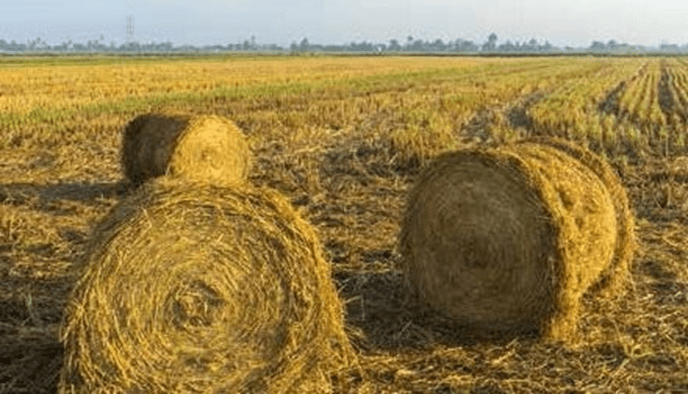
If the residues from the crops is managed scientifically and used as a conventional source of energy will go a long way to save the fossil fuel, coal, wood, precious foreign exchange expended on import of petroleum products, create additional employment, protect the environment as the incorporation of agricultural residues into the soil being eco-friendly and will also help to improve soil health if burning is avoided. Besides, this will also add to the income of farmers from the by-product generated in the form of biomass.
Punjab: Strategic Location
- Agricultural Hub: Punjab is one of India’s leading agricultural states, producing more than 200 Lakhs Metric Tons suitable for CBG production.
- Existing Infrastructure: Availability of gas pipelines, road networks, and industrial zones.
- Supportive Government Policies: Highlight state-level incentives, ease of doing business, and potential partnerships with local farmers and industries.
Advantages Of CBG Projects
1. Air pollution reduction
- Reduction in emission of large amounts of suspended particulate matter besides gases like CO, N2O, NOX, SO2
- Reduction in Smog during winter season
- Reduction in health issues like throat/respiratory/lung problems.
- Reduction in flying ash in environment.
2. Soil fertility Improvement
- Increase in fertility of soil as our AD facilities by-product ―Solid Humus Fertilizer will improve the humus balance (fertility) of the field subject to certification by accredited agency.
- Useful Microbes stays in field as zero burning in fields occurs.
- Preservation of nutrients like nitrogen and phosphorus in the field which are getting lost during paddy field burning.
3. Reduction of disturbance in ecological cycle which is affected due to straw burning, resulting in loss of insects/ eco-life
Facts about Biogas
- Biogas is a mixture of gases produced by microorganisms. It is a renewable source of energy. Methane is the predominant gas present in the biogas mixture.
- Biogas is a hydrocarbon fuel and not a fossil fuel. This is because the biogas is neither obtained from mining nor captured from geological deposits. It is naturally or biologically produced through anaerobic digestion.
- Biogas is a mixture of methane, hydrogen and carbon dioxide, produced by the decomposition of organic matter by bacteria in the absence of oxygen.
- Biogas is a renewable energy source produced by the breakdown of organic matter by certain bacteria, which results in a net decrease in the emission of greenhouse gases, prevents air pollution, water pollution, land and soil pollution.
- The organic matter generated after generation of Biogas, called Digestate is rich in nutrients and used as a fertilizer.
 Invest Punjab Blogs