
India’s economic policymaking often witnesses a complex interplay between the Reserve Bank of India (RBI) and the central government. This dynamic came to the forefront recently as outgoing RBI Governor Shakti Kanta Das maintained high interest rates despite the government’s push for growth-focused measures. This divergence in priorities highlights the challenges of balancing economic stability and development in a diverse nation like India.
Diverging Objectives
Governor Das, renowned for his pivotal role in implementing demonetization and GST, presided over the RBI during some of the most challenging periods in recent history, including the COVID-19 pandemic. However, as growth indicators showed signs of fatigue – from sluggish consumption to stalled investments – the RBI’s decision to keep interest rates elevated sparked concerns within the government.
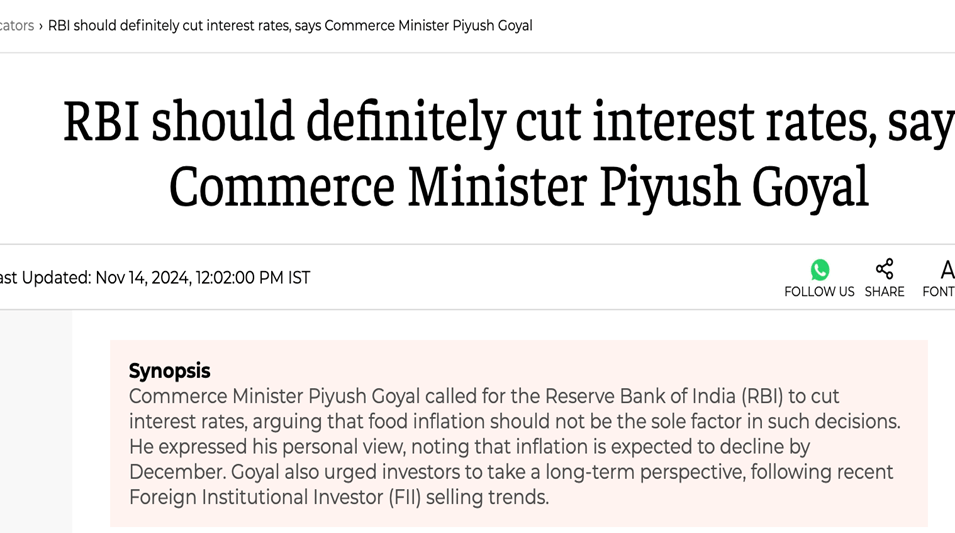
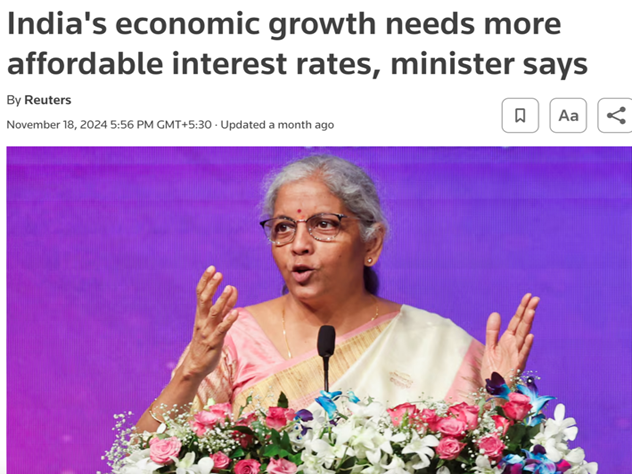
The government’s perspective, articulated by key ministers, emphasized that high borrowing costs were counterproductive to industrial growth and capacity building. Particularly in states like Punjab, where agricultural and industrial sectors form the backbone of the economy, affordable credit is critical for sustaining development and creating opportunities.
The Simran-Raj Moment of India’s Economy
Shaktikanta Das’s unwavering stance on keeping interest rates high earned him the reputation of stalling growth at a time when the economy needed a push. Critics likened him to Simran’s father in Dilwale Dulhania Le Jayenge, stubbornly holding her back from running to Raj.

In this case, Simran was India’s growth potential, yearning for the freedom of lower borrowing costs, while Das, playing the overprotective patriarch, insisted on keeping inflation under control. This conservative approach, , clashed with the government’s urgency to boost industrial and consumer activity.
The CRR and Inflation Conundrum
A significant point of contention during Das’s tenure was whether to reduce the Cash Reserve Ratio (CRR) from 4.5% to 4% to improve liquidity or to cut the repo rate directly. Both options carried weighty implications. Lowering the CRR would inject liquidity into the banking system, potentially boosting credit availability, while reducing the repo rate would directly lower borrowing costs.
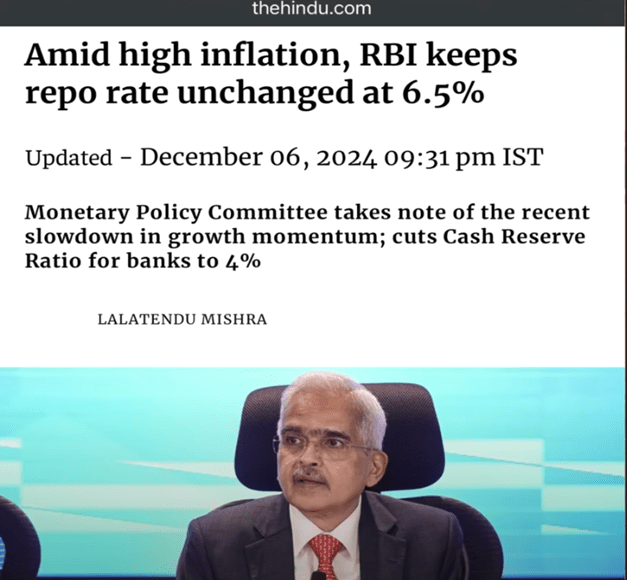
Adding complexity to this debate was the RBI’s focus on Consumer Price Index (CPI) inflation as its primary metric. While the central bank sought to curb price hikes by considering headline inflation (which includes volatile food and fuel prices), government leaders in Delhi, including the Finance Minister and Commerce Minister, argued that core inflation (which excludes food and fuel) should take precedence. They contended that core inflation better reflects long-term economic trends, while headline inflation is subject to short-term shocks like supply disruptions. This difference in approach created friction, as policymakers sought to align monetary measures with the broader growth agenda.
Implications for Punjab
For Punjab, the interplay between fiscal and monetary policy is particularly significant. The state’s economy thrives on sectors that are highly sensitive to credit availability, including agriculture, small-scale industries, and trade. Lower interest rates and improved liquidity could provide a much-needed boost, enabling businesses to expand, farmers to invest in technology, and households to access affordable financing.
However, the broader lesson from this episode is the importance of constructive collaboration between the government and the RBI. While the government’s role is to accelerate growth and ensure prosperity, the RBI acts as a stabilizing force, safeguarding against risks like inflation and financial instability. Both functions are vital for India’s economic resilience and long-term development.
Written By :
Annkur Kushwaha , Sr Consultant , Invest Punjab

